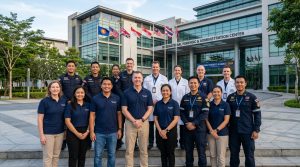
Enterprise-Grade Recovery, Evidence Preservation & Litigation-Ready Analysis Across ASEAN & Middle East

Content Restoration Forensic Services
Enterprise-Grade Recovery, Evidence Preservation & Litigation-Ready Analysis Across ASEAN & Middle East

Over 20+ years of combined forensic and technical restoration expertise across complex, high-value loss events.
When critical business assets, inventory, documents, or operational contents are damaged by fire, flood, contamination, or industrial incidents—our priority is not just restoration, but preserving evidential integrity while protecting financial and legal outcomes.
Delays in content restoration can result in irreversible evidence degradation, insurance disputes, regulatory exposure, and significant financial loss.
We operate across Malaysia, Singapore, Indonesia, Philippines, Thailand, India, UAE, Saudi Arabia, Qatar, and Oman, delivering rapid-response forensic content restoration aligned with insurance, legal, and regulatory frameworks.
Content restoration is not a cleaning exercise—it is a time-sensitive forensic process.
Failure to act immediately introduces compounding risks:
This is not restoration—it is risk management, evidence control, and financial protection.

Confidential Response Within 24 Hours

Request Urgent Content Restoration Consultation:
Confidential Response Within 24 Hours
Submit Incident Details & Documentation for Technical Review:
Our specialists can review incident reports, photographs, engineering documentation, and insurance claim files confidentially.

Why Immediate Action Matters in Content Restoration

Content restoration is not a cleaning exercise—it is a time-sensitive forensic process. Failure to act immediately introduces compounding risks:

Evidence Degradation

Smoke residues, soot, chemical contaminants, and moisture continue to react with materials, permanently altering forensic evidence critical to root cause determination and insurance validation.

Regulatory & Compliance Exposure

Improper handling of contaminated or damaged assets may violate environmental, safety, and industry-specific regulations.

Insurance Claim Vulnerability

Delayed or poorly documented restoration efforts often lead to claim disputes, reduced payouts, or outright rejection.

Litigation Risk Escalation

In high-value losses, inability to preserve or document contents properly may compromise legal defensibility.

Operational Downtime Costs

Every hour of delayed restoration increases business interruption exposure and financial loss.

Cross-Contamination Risks

Without controlled handling, salvageable contents may become irrecoverable.

When You Require Content Restoration Services

Our services are engineered for decision-makers responsible for financial, legal, and operational outcomes, including:

Insurance Adjusters & Loss Assessors

Seeking defensible, well-documented restoration processes aligned with policy conditions.

Legal Counsel & Litigation Teams

Requiring evidence-preserving restoration with court-admissible reporting.

Corporate Risk Managers

Managing high-value asset recovery while minimizing operational disruption.

Claims Directors & Insurers

Handling large-scale claims involving complex contents and cross-border implications.

Engineering & Operations Heads

Responsible for restoring critical equipment, inventory, and operational continuity.

Compliance & Regulatory Officers

Ensuring adherence to environmental, safety, and industry standards.

Technical Authority: Forensic Content Restoration Capabilities

We approach content restoration through a forensic, evidence-first methodology, not generic cleaning.

Advanced Restoration Methodologies

Contamination Mapping & Classification:
  • Identification of soot types (wet, dry, protein, fuel oil), chemical residues, biological contaminants, and water categories.
  • Material-Specific Restoration Protocols: Tailored processes for metals, electronics, documents, textiles, machinery components, and sensitive assets.
  • Decontamination & Neutralization Techniques: Including HEPA filtration, ultrasonic cleaning, ozone treatment, hydroxyl generation, and chemical neutralization.
  • Moisture & Corrosion Control Engineering: Preventing secondary damage through controlled drying environments and corrosion inhibitors.

Failure Analysis & Evidence Preservation Framework

  • Root cause alignment between damage patterns and incident origin
  • Preservation of chain of custody for critical items
  • Separation of restorable vs non-restorable assets with justification
  • Integration with fire investigation, flood analysis, or contamination studies

Standards & Technical References

Our methodologies align with internationally recognized frameworks, including:
  • ISO 9001 / ISO 14001 (Quality & Environmental Management)
  • ASTM Standards for material testing and contamination analysis
  • NFPA Guidelines (Fire-related damage and residue handling)
  • BS EN Standards for restoration and environmental control

Analytical & Laboratory Collaboration

  • Residue and contamination testing via accredited laboratories
  • Chemical composition analysis for insurance validation
  • Material degradation assessments
  • Microbiological testing (mould, bacteria, biohazards)

Court-Compliant Reporting

All restoration processes are documented with:
  • Photographic and video evidence logs
  • Technical restoration justifications
  • Loss quantification alignment
  • Expert opinion reports suitable for litigation and arbitration

Cross-Border Investigation Capability

  • Multi-jurisdictional case handling
  • Coordination with insurers, lawyers, and regulators across ASEAN & Middle East
  • Rapid deployment teams for regional incidents

Quantifiable Trust & Authority

Approved Group International maintains a multidisciplinary forensic and restoration team trusted by insurers, legal professionals, and corporations managing high-value incidents.
Authority indicators include:
  • 20+ years of combined forensic and restoration expertise
  • 500+ complex cases involving fire, flood, contamination, and industrial losses
  • 10+ countries across ASEAN and Middle East deployment capability
  • Multi-disciplinary teams (engineers, forensic specialists, restoration technicians)
  • Recognized by insurers, legal firms, and corporate clients
  • Experience in high-value, multi-million-dollar claims
  • Court-experienced experts providing defensible technical testimony
0+
Years of Combined Expertise
0+
Complex Cases Completed
0+
Countries Deployed
0%
Litigation-Ready Documentation

Industries & High-Risk Sectors We Serve

Content restoration investigations frequently occur in high-risk sectors where operational failures can cause significant financial, legal, or safety consequences.

Oil & Gas

Restoration of critical equipment, control systems, and contaminated inventory following fire or hydrocarbon incidents.

Industrial Manufacturing

Recovery of machinery, production components, and raw materials affected by contamination or water ingress.

Infrastructure & Construction

Restoration of site materials, documentation, and equipment impacted by environmental or accident-related events.

Marine & Offshore

Saltwater contamination, corrosion management, and recovery of vessel contents and cargo.

Power Generation

Sensitive restoration of turbines, control panels, and electrical systems requiring precision handling.

Property & Commercial Assets

High-value contents restoration in commercial buildings, hotels, retail, and mixed-use developments.

Heavy Machinery & Equipment

Restoration of large-scale operational assets with corrosion and contamination risks.

Regional Expertise: ASEAN & Middle East Coverage

AGI delivers forensic content restoration across multiple jurisdictions with deep familiarity in regional regulatory, insurance, and legal environments.
Malaysia — Deep familiarity with local insurance frameworks, regulatory expectations, and litigation practices.
Singapore — Strict compliance with regulatory standards and documentation requirements for high-value claims.
Indonesia & Philippines — Experience in large-scale industrial and infrastructure loss environments with logistical complexity.
Thailand — Strong understanding of manufacturing sector risks and insurance-driven restoration requirements.
India — Handling high-volume industrial claims with regulatory and documentation sensitivity.
UAE, Saudi Arabia, Qatar, Oman — Expertise in energy, infrastructure, and large commercial losses within Middle Eastern legal frameworks.

Why AGI Outperforms Global Restoration Firms

Many multinational restoration firms operate from centralized hubs, creating delays and higher costs for regional cases. AGI offers a regionally agile, forensic-led capability designed specifically for ASEAN and Middle East markets.
Key differentiators include:
Faster Regional Deployment: Reduced response time across ASEAN and Middle East compared to global firms operating from distant hubs.
Cost-Efficient Without Compromising Technical Rigor: Optimized operational structure delivering high-value outcomes without excessive global overheads.
Forensic-Led Restoration Approach: Unlike generic restoration providers, we integrate investigation, evidence preservation, and reporting.
Litigation-Ready Documentation: Designed for insurers, lawyers, and courts—not just operational recovery.
Multidisciplinary Expertise: Engineers, forensic specialists, and restoration professionals working as a unified team.
Regulatory & Cultural Familiarity: Localized understanding across multiple jurisdictions ensures smoother case handling.
This allows AGI to provide global-standard forensic content restoration with regional responsiveness.

Structured Engagement Framework

AGI follows a disciplined engagement framework designed to ensure evidence integrity, defensible restoration outcomes, and alignment with insurance and legal requirements.

Incident Notification

Immediate response and case intake with confidentiality assurance.

Evidence Preservation & Stabilization

On-site control to prevent further damage and secure critical assets.

Technical Assessment & Restoration Planning

Classification, prioritization, and restoration methodology design.

Restoration Execution & Monitoring

Controlled, documented restoration aligned with forensic requirements.

Expert Reporting & Litigation Support

Comprehensive reports, insurance coordination, and expert testimony if required.

Scenario-Based Case Illustration

A demonstrated example of AGI's forensic content restoration capability in a complex industrial environment.

Situation

A manufacturing facility experienced a fire affecting production equipment and stored inventory.

Technical Challenge

Severe soot contamination across sensitive machinery and raw materials, with risk of insurance dispute over salvageability.

Investigative Method

AGI investigators conducted a forensic content restoration assessment involving:
  • Contamination classification (wet soot vs chemical residues)
  • Material-level restoration feasibility analysis
  • Laboratory testing for residue composition

Findings

65% of machinery deemed restorable with controlled decontamination. Significant portion of inventory salvaged through specialized cleaning.

Outcome Impact

Reduced total claim value by over 40%. Accelerated operational recovery timeline. Provided defensible documentation for insurer approval.

Advanced FAQ – Content Restoration Services

Common questions about forensic content restoration services.

1. How much does content restoration cost?

Content restoration costs vary significantly depending on the scale of damage, type of materials affected, contamination severity, and required forensic documentation. High-value industrial cases involving machinery, electronics, or regulated environments typically require specialized decontamination, laboratory testing, and controlled restoration environments, which influence cost structures. For insurance-related cases, costs are often evaluated against policy coverage, salvageability ratios, and claim justification requirements. At AGI, we do not provide generic estimates—we conduct a structured technical assessment to determine restoration feasibility, cost-benefit alignment, and financial impact relative to replacement value. This ensures that all restoration efforts are economically justified, defensible to insurers, and aligned with your broader risk and litigation considerations.

2. How long does the restoration process take?

Timelines depend on the extent of damage, type of contents, and complexity of contamination. Simple restoration cases may take days, while complex industrial or cross-border cases can extend over several weeks. Critical factors include moisture levels, contamination type (e.g., soot, chemicals, biohazards), and the need for laboratory validation. Importantly, restoration timelines must be balanced with evidence preservation requirements—rushing the process can compromise forensic integrity and insurance outcomes. AGI adopts a phased approach, allowing urgent stabilization and partial restoration to begin immediately, while detailed technical processes continue in parallel. This minimizes downtime while maintaining compliance with forensic and insurance standards.

3. Can you handle cross-border content restoration cases?

Yes. AGI is structured to handle multi-jurisdictional cases across ASEAN and the Middle East. This includes coordination with insurers, legal teams, and regulatory authorities in different countries. Cross-border cases often involve logistical challenges, varying regulatory frameworks, and differing insurance practices. Our teams are experienced in managing these complexities, ensuring that restoration processes remain compliant and defensible across jurisdictions. We also provide centralized reporting to maintain consistency for stakeholders involved in international claims or litigation.

4. Do you provide expert witness support for litigation?

Yes. Our experts are experienced in preparing court-compliant reports and providing expert testimony in disputes related to content damage, restoration feasibility, and loss valuation. All restoration activities are documented with evidential integrity, ensuring that findings can withstand legal scrutiny. We work closely with legal counsel to align technical reporting with litigation strategies, providing clarity on causation, damage extent, and restoration justification.

5. What types of contents can be restored?

We handle a wide range of contents, including machinery, electronics, documents, textiles, inventory, and specialized equipment. Each category requires distinct restoration methodologies. For example, electronics require anti-corrosion treatment and precision cleaning, while documents may require freeze-drying or deacidification. The key is accurate classification and application of the correct restoration protocol to maximize recovery while preserving evidential value.

6. Will restoration affect insurance claims?

Yes—significantly. Properly executed restoration can reduce claim values, support claim approval, and prevent disputes. Conversely, improper handling or undocumented restoration can lead to claim rejection or reduced payouts. Our processes are aligned with insurance requirements, ensuring that all restoration activities are transparent, justified, and supported by technical evidence.

7. How quickly can you mobilize?

We provide rapid deployment across Malaysia and major ASEAN and Middle East markets. Initial response can typically be initiated within 24–48 hours, depending on location and case complexity. Immediate stabilization measures can often be implemented sooner to prevent further damage.

8. How do you ensure evidence is preserved during restoration?

Evidence preservation is integrated into every stage of our process. We maintain strict chain-of-custody protocols, document all handling activities, and separate restoration from investigative analysis where necessary. This ensures that restoration does not compromise forensic findings or legal defensibility.

9. Do you work directly with insurance companies?

Yes. We regularly collaborate with insurers, adjusters, and claims professionals. Our reporting is structured to align with insurance documentation requirements, facilitating smoother claim processing and reducing the likelihood of disputes.

10. What makes AGI different from standard restoration companies?

Standard restoration companies focus primarily on cleaning and recovery. AGI operates at the intersection of forensic investigation, technical restoration, and litigation support. This ensures that every restoration decision is technically justified, financially optimized, and legally defensible.

Aileen
AileenScope Sdn Bhd
Lorem ipsum dolor sit amet, consectetur adipiscing elit. Vivamus velit justo, suscipit a mauris scelerisque, tristique sagittis justo. Pellentesque turpis nulla, maximus nec vulputate vel, luctus in diam. Duis pretium.
John Doe
John DoeCrucial
Lorem ipsum dolor sit amet, consectetur adipiscing elit. Vivamus velit justo, suscipit a mauris scelerisque, tristique sagittis justo. Pellentesque turpis nulla, maximus nec vulputate vel, luctus in diam. Duis pretium.
Alex
AlexVital Supply Ltd
Lorem ipsum dolor sit amet, consectetur adipiscing elit. Vivamus velit justo, suscipit a mauris scelerisque, tristique sagittis justo. Pellentesque turpis nulla, maximus nec vulputate vel, luctus in diam. Duis pretium.

Multi-Layer Call-to-Action Architecture

Confidential assessment. Rapid response. Evidence-first approach.
Submit Claim Case Details for Technical Evaluation — Structured review aligned with insurance and regulatory requirements.
Engage a Forensic Content Restoration Specialist for Your Sector — Oil & Gas | Manufacturing | Infrastructure | Marine | Power | Commercial Assets
Activate Emergency Restoration & Evidence Preservation Team — Available across ASEAN & Middle East.

Schedule a Confidential Consultation with AGI Experts

Protect your assets. Preserve your evidence. Strengthen your position.

Approved Group International (AGI)

Delivering forensic clarity, restoration precision, and defensible outcomes across high-stakes environments.
Early engagement helps ensure evidence integrity, technical accuracy, and defensible restoration outcomes.
rocketchevron-down linkedin facebook pinterest youtube rss twitter instagram facebook-blank rss-blank linkedin-blank pinterest youtube twitter instagram